

How to Start Over in Life
Build the Life You’re Already In.
Everybody tells you that you can start over. I don’t think that’s true. I don’t think any of us ever start over. We start again. But we never start from zero.
Start Rebuilding →Nobody gets a blank page. You don’t wake up without memories. You don’t suddenly forget the addiction, the years, the people you hurt, the version of yourself you’re still ashamed of. You carry every one of them. The question isn’t whether you’ll carry them. The question is whether they’ll carry you.
How do you start over in life? You don’t rebuild your life first. You rebuild the way you see it. Perspective comes before rebuilding — not the other way around. Everything else follows from there.
Estimated reading time: 27 minutes
- ✓ You are not starting from zero.
- ✓ Build trust before confidence.
- ✓ Small promises compound.
- ✓ Identity follows repetition, not insight.
- ✓ Starting over is a direction, not an event.
- ✓ What starting over really means
- ✓ Why starting over feels impossible
- ✓ Why you aren’t starting from nothing
- ✓ When being busy becomes another escape
- ✓ Rebuilding self-respect
- ✓ The biggest mistake people make
- ✓ Learning to trust yourself again
- ✓ What starting over actually looks like
Table of Contents
- Founder Reflection
- The Day I Actually Started Over
- What Starting Over Really Means
- The Soberminds Rebuilding Framework
- Why Starting Over Feels Impossible
- You’re Not Starting From Nothing
- Starting Over Isn’t the Same for Everyone
- The Women I’ll Never Forget
- When Being Busy Becomes Another Escape
- How to Start Over in Life
- Starting Over vs Moving On
- The Weight of the Past
- Rebuilding Self-Respect
- The Biggest Mistake
- Learning to Trust Yourself Again
- Keeping Promises to Yourself
- Starting Over After Failure
- What Starting Over Actually Looks Like
- Common Mistakes People Make
- Small Decisions Change Entire Lives
- How Long Does Starting Over Take?
- Building Protects Recovery
- The First Year Wasn’t Beautiful
- I’m Still Rebuilding
- What Starting Over Is NOT
- Related Articles
- Signs You’re Making Progress
- FAQ
Have you ever looked around your own life and quietly wondered how you ended up here?
How do I even begin fixing this? Is it too late? Am I too old? Did I waste too many years? What if I ruined everything?
If that’s why you’re here, you’re not alone.
I Didn’t Start Over Once. I Started Over Again and Again.
For most of my life, I thought changing my location would change my life.
I moved more times than I can count. New cities. New jobs. New relationships. New houses. Every time I packed my bags, I convinced myself that this place would be different. That somehow the next chapter would fix everything the last one didn’t.
It never did.
The problem wasn’t the city. It wasn’t the job. It wasn’t the people around me.
The one thing that came with me every single time was me.
I spent years trying to outrun myself. Addiction followed me. Anger followed me. Fear followed me. Shame followed me. Wherever I went, those things showed up too.
Geography never solved what only behavior could.
Everywhere I went, I took myself with me.
Looking back, I realized I wasn’t starting over every time I moved. I was rebuilding from whatever pieces were left after the last chapter of my life. Sometimes there were a lot of pieces. Sometimes there were almost none. But there was never nothing.
Experience remained. Pain remained. Lessons remained. The ability to choose differently remained, even when I wasn’t using it yet.
Eventually I got sober.
Not because I suddenly figured life out, but because people believed in me before I believed in myself. Sponsors. Friends. Men who had already walked the road I was just beginning. They kept showing up until I finally started showing up for myself.
That’s when I learned something I’ll probably spend the rest of my life trying to explain.
You don’t rebuild your life all at once.
You rebuild your word.
One promise.
One decision.
One day at a time.
Years later, I sold almost everything I owned and moved to Peru with a couple of bags. People thought I was starting over again.
I wasn’t.
I was continuing the same rebuild I’d started years earlier.
Soberminds came from that same process. It wasn’t built because I had everything figured out. It was built while I was still figuring it out. Every article, every Field Guide, every design, every house I’ve renovated, every car I’ve rebuilt—they all came from the same place.
Building protects my recovery.
I’m still rebuilding today.
I’m still learning.
I’m still keeping promises to myself.
That’s why I don’t believe people start from zero.
We start from wherever life left us.
And we build from there.
Read the rest in my full journey. This page isn’t my life story. It’s one lesson my life taught me.
My kids gave me what I’m building for. Kevin gave me why I can’t wait any longer.
The Day I Actually Started Over
One of the biggest moments in rebuilding my life wasn’t the day I quit drinking. It happened much later.
For months after I got sober, I honestly wasn’t convinced I was going to make it. I wasn’t excited. I wasn’t motivated. I wasn’t rebuilding anything. I was just trying to survive another day.
The real turning point came when I finally accepted something I had been fighting for a long time. My wife wasn’t coming back. My kids weren’t coming to live with me. That chapter of my life was over.
It hurt. But at the same time it gave me freedom.
I remember sitting in my apartment realizing something. Nobody was coming to rebuild my life. Nobody was going to save me. It was up to me.
Instead of trying to rewrite that old book, I decided to write another one. That’s when I finally started learning who Mark actually was.
What Starting Over Really Means
Let me tell you something almost everyone gets wrong. They think starting over means erasing what happened and beginning again from a blank page. It doesn’t work like that, and it never did. Whether you’re rebuilding after addiction, divorce, financial collapse, or grief, the principles are remarkably similar.
The years happened. The damage happened. The relationships happened. If you’ve ever felt trapped by your past, read What Nobody Tells You About Starting Over.
A lot of people quietly sabotage their own rebuilding by holding out for a version of starting over that includes a clean slate. There is no clean slate. There’s just today, and what you choose to do with it, carrying everything that came before.
A clean slate would mean none of your experience counted for anything — every hard lesson wasted, every scar meaningless. Building forward instead means everything you survived is actually usable material, not dead weight you have to pretend doesn’t exist.
The First Honest Decision
Every real rebuild traces back to one honest decision, usually smaller and less dramatic than people expect. Not a five-year plan. Not a public declaration. Just one true thing, admitted to yourself, that everything after it gets built on. Field Guide // 000 was built around exactly this idea — twenty questions for the quiet, undramatic work of starting over.
Mine happened on my first Christmas sober. I stood in a room full of family, wanting so badly to just walk out and get a bottle. I felt completely out of place in my own life. But I kept telling myself one thing, over and over: sit in this. This discomfort is the thing that’s going to make the change. This is what’s going to rewire your brain. I didn’t leave. That was the whole decision — not a plan, not a declaration to anyone else, just staying in a room I wanted to run from.
You aren’t rebuilding your life. You’re rebuilding your word.
Underneath all of it is the same question: whether your word means anything to you anymore. Not your reputation with other people — your actual word, the one only you hear when you tell yourself you’ll do something. Addiction erodes that first, usually years before it touches anything visible. Rebuilding a life without rebuilding that is just rearranging furniture in a house with no foundation.
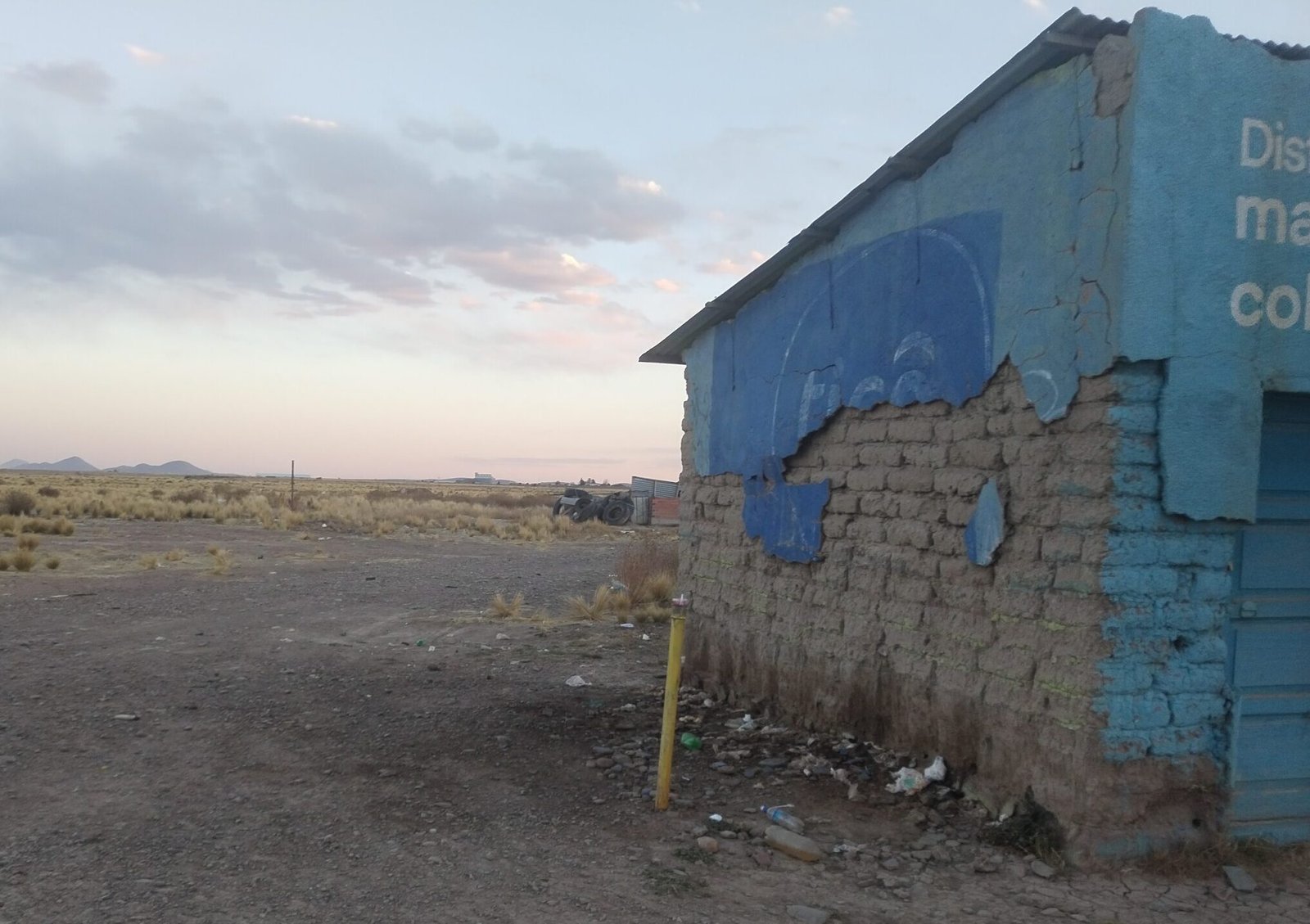
Not a blank page. A road that starts exactly where you’re standing.
Six Stages, Not Six Steps
This isn’t a checklist you complete once. It’s the shape rebuilding actually takes, whether you notice it happening or not. Every pillar on this site — Identity, Discipline, Clarity, Peace — lives somewhere inside these six stages.
1. Acceptance
Not surrender. Not giving up. Acceptance is the moment you stop pretending the old life is still working. It’s rarely dramatic. Usually it’s quiet, private, and comes months before anyone else notices anything changed. This connects directly to Clarity — seeing what’s actually true, before you’re ready to do anything about it yet.
2. Borrowed Belief
You don’t start out believing you can rebuild. Almost nobody does. In the beginning, someone else has to believe it for you — a sponsor, a friend, a stranger in a meeting who’s further along. You borrow their belief the way you’d borrow money you can’t pay back yet. That’s not weakness. It’s how most real change actually starts.
Mine was named Don. An old country boy from East Kentucky who saw something in me before I could see it myself. He’d talk my ear off — how lucky I was, how one day my story was going to be powerful. He’s the one who kept me in AA that first year, showing up to drag me to two or three meetings a day whether I wanted to go or not. I didn’t believe him yet. I believed in him. That was enough to start.
3. One Promise
Not a plan. Not a resolution. One specific, small promise, kept once. This is where borrowed belief starts becoming something that belongs to you. It rarely feels significant while it’s happening.
Mine came out of a group chat early in sobriety. We made a simple pact: I promise not to drink or use in the next twenty-four hours. Just grant me these twenty-four hours. That’s all it was. Twenty-four hours, promised out loud to people who’d know if I broke it.
4. Evidence
One kept promise becomes two, then ten, then more than you’re consciously tracking. This is where Discipline actually lives — not in willpower, but in the slow accumulation of proof that your word means something again.
5. Identity
Enough evidence, repeated long enough, stops being something you did and starts being who you are. This is where Identity gets rebuilt — not through insight or realization, but through repetition that eventually becomes permanent.
6. Purpose
Building doesn’t only mean houses. Or businesses. Or clothing. Building means creating a life that gives tomorrow a reason to exist. This is where Peace becomes possible — not because the work is finished, but because it finally has direction. Building protects recovery. This is the stage where you find out why.
Why Starting Over Feels Impossible
Rebuilding your life feels impossible for one simple reason.
You’re trying to rebuild everything at once.
The career.
The relationship.
The finances.
Your health.
Your reputation.
Your confidence.
Your sense of who you even are anymore.
When you stack all of that together, of course it feels overwhelming. You’re trying to solve years of problems in a single afternoon. Anybody would feel crushed by that.
Most people don’t fail because they aren’t capable of rebuilding.
They fail because they believe they have to fix their entire life before they’re allowed to feel hopeful again.
You don’t.
Be Selfish—for the Right Reasons
If you’re at the beginning of this, I want to tell you something that nobody told me.
For a little while, you need to be selfish.
Not the kind of selfish that hurts people.
The kind that finally starts taking care of yourself.
Because for a while, you have to become the project.
Stop worrying about finding the perfect relationship.
Stop worrying about proving everybody wrong.
Stop worrying about making a million dollars.
Stop trying to rebuild your entire future before you’ve rebuilt the person who’s supposed to live it.
Work on yourself first.
I can’t stress that enough.
Because once your perspective changes…
Once your thinking changes…
Once you start respecting the person looking back at you in the mirror…
Everything else becomes easier to build.
Not easy.
Just easier.
Forget Overnight Success
One of the biggest lies we believe is that life can change overnight.
We want overnight confidence.
Overnight money.
Overnight relationships.
Overnight success.
Sometimes we wish there was a button we could push that erased our past so we could wake up as somebody completely different.
Life doesn’t work like that.
Real rebuilding happens one decision at a time.
One promise.
One conversation.
One day.
Don’t focus on rebuilding your entire life.
Focus on rebuilding yourself.
Everything else gets built on top of that.

You’re Not Starting From Nothing
This is the single most important reframe in this entire guide: you are not starting over from nothing. You’re starting over from everything you survived to get here.
You know exactly what rock bottom looks like, which most people never have to learn. You have direct, hard-won knowledge of your own capacity to endure things that would break plenty of people. You’ve already done the hardest part of any major life change — deciding, and beginning.
None of that is nothing. Starting over after losing everything still means starting with something — it’s a foundation most people never build, because most people never have to.
One of the biggest lies I believed was that I had ruined everything. Then one day I realized something. I wasn’t starting from zero. I still had my creativity. I still loved building things. I’d always been good with my hands. I’d spent years solving problems, years figuring things out. Those parts of me survived. The drinking covered them up. It didn’t destroy them.
That’s when I stopped seeing myself as someone who had lost everything. I started seeing myself as someone with years of experience who finally had the chance to use it differently.
According to SAMHSA’s 2025 National Survey on Drug Use and Health, 22.3 million American adults consider themselves in recovery from a drug or alcohol use problem. You’re not doing this alone, even if it feels that way most days.
You’re not starting from zero. You’re starting from everything you survived.
Starting Over Isn’t the Same for Everyone
One thing that always frustrates me is when people compare stories. One person comes in from the streets. Someone else comes from a rehab. Someone else comes from a park bench. Somebody else comes from their mother’s basement. Then you have doctors. Lawyers. Business owners. Successful people. People with beautiful homes. People with absolutely nothing.
Addiction doesn’t care. It tears through everyone the same way. It destroys families. Relationships. Careers. Trust. Identity.
I’ve sat in rooms with every kind of person imaginable. When we walked through those doors, none of our job titles mattered anymore. We were simply people trying to build a different life.
The Women I’ll Never Forget
There is another group of people I will never forget. The women.
Some of the strongest people I’ve ever met in recovery were women who had survived things I can’t even imagine. Some had been forced into prostitution. Some had escaped abusive relationships. Some had lost children. Some had lost everything.
Listening to their stories changed me. As men we struggle. But many of these women carried burdens that most people will never fully understand. Watching them rebuild their lives showed me what real strength actually looks like. I’ll never forget them.
When Being Busy Becomes Another Escape
Nobody warns you about this part. I traded one addiction for something that looked a lot healthier on the outside — work. Military. Offshore. Renovating houses. Restoring cars. Moving to another country and immediately finding something new to build. From the outside, all of that looks like recovery working exactly the way it’s supposed to.
Some of it was. But some of it was just a new place to disappear into, so I never had to sit still long enough to feel anything. Just because you’re moving doesn’t mean you’re healing. I wrote more about this in Addicted to Being Busy After Addiction — the difference between purpose and distraction isn’t always obvious from inside it. Purpose builds something and leaves room for you to exist alongside it. Distraction just keeps you moving fast enough that you never have to ask what you’re actually running from. Being exhausted and being fulfilled are not the same thing.
I found that out the hard way in Peru. For years, sobriety and physical work went together for me — I was always fixing up a house, restoring a car, always building something with my hands. Then I landed here with nothing to work on yet, no project to disappear into, and I realized I hadn’t actually learned how to sit still. I’d just found a healthier place to hide. That gap — between the last project ending and the next one starting — turned out to be some of the hardest ground I’ve had to stand on in recovery.
Stop waiting for motivation. Start collecting evidence.
Read the Full Journey →How to Start Over in Life
People searching for how to rebuild your life after addiction usually aren’t looking for philosophy. They want a starting point. Here’s the honest version, stripped of theory.
Start with one decision, not a plan. A plan requires information you don’t have yet about how the next six months will actually go. A decision only requires knowing what you’re doing today. Pick the single most overdue task in your life right now and do that one thing before anything else.
Expect the first weeks to feel worse, not better. Rebuilding surfaces problems that were previously being ignored or managed by the old pattern. That discomfort is evidence you’re doing it correctly, not a sign something’s gone wrong.
Build a short daily structure you can actually sustain, not an idealized one you’ll abandon by Thursday. A five-item list you complete consistently beats a twenty-item list you complete once.
Tell one person the truth about where you actually are. Isolation makes rebuilding significantly harder.
Measure progress in months, not days. You can’t build yesterday. You can’t build tomorrow. You can only build today.
Starting Over vs Moving On
These two ideas get used interchangeably, and they describe different things.
| Starting Over | Moving On |
|---|---|
| Building something new | Letting go |
| Requires action | Requires acceptance |
| Builds trust | Builds peace |
Most people need both at different points. Neither one replaces the other.
The Weight of the Past
One of the biggest lies people believe about starting over is that somehow your past disappears.
Like one day you wake up, decide you’re going to change your life, and everything that came before just gets erased.
Yeah…
That’s not how it works.
You don’t stop remembering the people you hurt.
You don’t forget the nights that still make you cringe.
You don’t erase the regret.
You don’t erase the shame.
You don’t erase the mistakes.
And if you’re anything like me, the people who knew you before recovery will remind you every time they see you just how much you’ve changed.
Your past doesn’t disappear.
It stays exactly where it’s always been.
The difference is that it stops controlling your future.
Healing doesn’t erase history.
It changes what history means.
For a long time, every mistake I’d ever made felt like proof that I was never going to become anything different.
Every bad memory became another reason to hate myself.
Another reason to believe I didn’t deserve a better life.
Recovery slowly changed that.
Not because the memories disappeared.
Because I stopped giving them permission to define who I was becoming.
That’s when healing really starts.
Not when you forget.
When you learn to let go.
You let go of the guilt that no longer serves you.
You let go of the shame you’ve been carrying for years.
You let go of the version of yourself that no longer exists.
The memories stay.
The lessons stay.
But the weight gets lighter.
Tell the Truth
One of the greatest gifts recovery ever gave me wasn’t forgetting my past.
It was finally being able to talk about it.
For years I kept everything locked inside because I thought if people knew the truth, they’d see me the way I saw myself.
Instead, I found the opposite.
Every time I told the truth, it lost a little more of its power.
The things that haunted me the most started feeling smaller every time I stopped hiding them.
That’s why I believe healing isn’t about erasing your story.
It’s about finally being willing to tell it.
Because the moment your past stops being a secret…
It stops being your prison.
Rebuilding Self-Respect
Self-respect and feeling good about yourself are two completely different things. People mix them up constantly.
Feeling good about yourself can be anything. Sunshine on a good day. A picture that actually came out right. It’s real, but it doesn’t mean much — it comes and goes with the weather.
Self-respect isn’t something you feel. It’s something you earn back from yourself. It’s doing what your sobriety actually needs, not what feels good in the moment. It’s setting the boundary. It’s doing the next right thing whether you feel like it or not. It’s looking yourself in the mirror and finally being able to say, “I respect you.” That’s not a mood. That’s earned.
Self-respect is built through alignment between what you believe, what you say, and what you repeatedly do. A major life collapse fractures that alignment. Starting over creates the opportunity to rebuild it; it does not complete the work automatically. Eventually you stop needing to defend yourself. You stop hiding. Your behavior speaks for itself.
Why Shame Keeps People Stuck
Guilt says: I did something wrong. Shame says: I am something wrong. Shame doesn’t respond to instruction. It responds to evidence, and it loses authority gradually, as present behavior repeatedly contradicts what it’s claiming about you. Read more on Identity.
Boundaries protect this entire project. A boundary defines what you’re willing to participate in, and it’s only meaningful when it’s actually followed by action.
A Boundary Is
- A clear limit
- Communicated directly
- Followed consistently
- Based on your actions
A Boundary Is Not
- A threat
- Punishment
- An attempt to control another person
- An excuse to avoid every difficult conversation
Feeling terrible forever does not repair what happened. Changed behavior is the repair you can still control.
Starting over isn’t becoming someone new. It’s finally becoming someone you stopped abandoning.
The Biggest Mistake I Made
If you asked me what the biggest mistake I made after getting sober was, I’d probably surprise you.
It wasn’t drinking.
It wasn’t the drugs.
It wasn’t even believing I could do it all by myself.
It was expecting my decision to get sober to change everyone else’s life overnight.
I honestly thought people would see this brand-new version of me and immediately trust me again.
I thought relationships would magically heal.
I thought people would finally understand.
I thought the world would somehow reward me just because I stopped drinking.
It doesn’t work like that.
Nobody owes you forgiveness because you finally decided to change.
Nobody owes you trust because you’ve been sober for a few weeks.
Nobody hands you your life back simply because you made one good decision.
Be patient.
Do the work.
Keep showing up.
Eventually your actions become louder than your past.
Take the Mask Off
Here’s what nobody prepared me for.
Getting sober meant I couldn’t hide behind the mask anymore.
For years alcohol covered everything.
It covered my fear.
My anxiety.
My anger.
My insecurities.
Without it, I had to meet the real version of myself.
And honestly…
That scared the hell out of me.
Some of us don’t wear one mask.
We wear five.
One for work.
One for our family.
One for our friends.
One for social media.
One for the person we pretend to be when nobody really knows us.
By the time addiction is over, you’ve been pretending for so long that you don’t even know which one is actually you anymore.
Recovery starts pulling those masks off.
One by one.
And eventually you’re left standing there with nowhere left to hide.
Just you.
No excuses.
No alcohol.
No drugs.
No character to play.
Just the person looking back at you in the mirror.
That’s terrifying.
But it’s also where rebuilding finally begins.
Because you can’t rebuild a fake person.
You can only rebuild the real one.
I don’t build because I’m sober. I stay sober because I build.
Learning to Trust Yourself Again
Self-trust doesn’t return through a single good week. It rebuilds the same way trust with another person does — through a consistent pattern of kept promises, evaluated honestly over time. Every promise you keep becomes evidence against the person you used to be.
For years I believed trusting people was dangerous, because eventually everyone leaves. Recovery slowly taught me something different. People may leave. But the promises I make to myself don’t have to. The goal was never learning to trust everyone. The goal was learning to trust my own word again.
You Don’t Need Permission
Waiting for someone else’s approval before you start rebuilding is one of the quieter ways people delay their own progress. Clarity helps you see honestly what you can and can’t yet trust yourself with. The American Psychological Association describes resilience as a process that can be learned and built over time, not a fixed trait.
You don’t build confidence. You collect evidence.
Keeping Promises to Yourself
People often try to rebuild self-respect with affirmations, motivational speeches, or dramatic resets. Those approaches rarely hold, because they generate words, not evidence.
One Promise at a Time
The stronger method is simpler and much less dramatic: waking up when you said you would. Answering the message you’ve been avoiding. Telling the truth when a lie would be easier.
This connects directly to discipline, which generates the repeated evidence self-respect is actually built from. The opposite of addiction isn’t sobriety. It’s keeping your word.

Starting Over After Failure
Failure inside a rebuild feels different than failure before one — it can feel like proof the whole attempt was doomed. It usually isn’t. A missed day, a broken promise, a relapse into an old pattern doesn’t erase the months of evidence built before it. It’s one data point inside a much longer one.
I know this one from the inside. I had almost six years — a few months short of six full years of continuous sobriety — when I relapsed. They say the relapse starts before you ever take the drink. I never understood what that meant until it happened to me. In the months before it, I’d quietly stopped doing almost everything sobriety had taught me. I’d come off my medication. I was isolating, keeping to myself, losing my temper again. People who cared about me noticed and asked directly what was going on, and I told them I had it under control. I believed that when I said it.
Every part of me wanted to treat the relapse itself as proof the whole thing had been a lie — that I’d never really changed, that the years before it didn’t count. They still counted. What mattered was what I did in the aftermath, not the night it happened.
What matters after failure is what happens next, not the failure itself.
What Starting Over Actually Looks Like
The Daily Reality
Not a montage. Not a single dramatic scene. It looks like the same small routine, repeated on days that don’t feel significant, for long enough that a rebuilt life is visible only in hindsight.
The Myth of Motivation
Motivation shows up early and disappears quickly, usually right around the point the real work starts. What continues functioning after motivation leaves is discipline — the decision to keep going regardless of how you feel about it that day.
Why Consistency Beats Intensity
An intense, unsustainable burst of effort rarely outlasts the first hard week. What compounds over months is unglamorous consistency.
Common Mistakes People Make
- Trying to fix everything simultaneously
- Waiting to feel ready before starting
- Making promises meant to impress others, not to keep
- Demanding instant trust from people you’ve hurt
- Treating one setback as total failure
- Confusing intensity with progress
- Rebuilding in isolation, refusing all support
- Comparing your beginning to someone else’s middle
Small Decisions Change Entire Lives
Grand five-year plans feel productive to make and are almost useless in early rebuilding. What actually moves rebuilding forward is much smaller: one kept promise, one paid bill, one hard conversation finally had.
Small wins compound in a way big plans don’t. Over months, these individually small days accumulate into something that looks, from a distance, exactly like a rebuilt life.
Stop Asking How Long
One of the biggest mistakes people make is asking, “How long is this going to take?”
I don’t know.
Nobody does.
I’ve met people who rebuilt their lives in two years.
I’ve met people who spent ten years trying to figure themselves out.
I’ve also met people who never started at all.
Don’t become one of them.
Recovery isn’t a race.
Rebuilding isn’t a competition.
Stop measuring your life against someone else’s timeline. Your recovery isn’t supposed to look like mine, and mine isn’t supposed to look like yours. The only thing that matters is that you’re still moving forward.
The only question that matters is:
Are you still building?
That’s it.
Some days you’ll move forward.
Some days you’ll feel like you went backward.
Some weeks you’ll wonder if any of it is working.
You’re going to question yourself. You’re going to wonder if all this work is even making a difference.
Keep building anyway.
One day you’ll look behind you and realize the life you were trying so hard to rebuild has quietly been rebuilt while you were busy showing up every day.
A rebuilt life isn’t created because enough time passed.
It’s created because enough honest work was done.
Building Protects Recovery
Recovery didn’t give me a new life. It gave me something worth building. Sometimes that’s meant a car. Sometimes a house. I’ve written both of those stories in full elsewhere, because they deserve more room than a page about starting over in general can give them — I Didn’t Rebuild the Car. I Rebuilt the Person Driving It. and the house that started as a pile of rocks.
Building protects recovery. Not the other way around.
The First Year Wasn’t Beautiful
People love talking about Day One. They don’t talk enough about Day Ninety. Or Day One Hundred. Or Month Six.
My first year wasn’t inspiring. It wasn’t peaceful. Day One sucked. Week One sucked. Day Thirty sucked. Around Day Ninety was when things slowly started changing — I started seeing a counselor, I became serious about AA, I became serious about rebuilding.
But if I’m being honest, the first year wasn’t some magical transformation. It was work. A lot of work. And if your first year feels hard too, you’re probably doing better than you think.
I’m Still Rebuilding
I’m not writing any of this from the other side of it, finished and looking back. I’m still rebuilding trust with my kids. Still rebuilding other relationships. Still rebuilding myself, some days more successfully than others.
Peru taught me patience in a way nothing else had. Sitting still, walking without anywhere to be, learning to be alone with my own thoughts instead of needing something to drown them out. I still can’t say I’ve arrived at real peace — the kind that holds up no matter what’s happening around you. Most days, peace for me still looks like going on a walk alone, or sitting somewhere busy and just watching the world move. I’m not there yet, and I’d rather tell you that honestly than pretend otherwise.
Where My Feet Are
The future creates anxiety. The past creates regret. The work only actually happens today, in whatever’s in front of you right now. That’s not a mindset trick. It’s just where the actual work lives.
I used to answer questions nobody had even asked yet — already three steps into a future that hadn’t happened, already defending myself against something nobody said. That’s not presence. That’s anxiety wearing the costume of preparation.
What Starting Over Is NOT
- Pretending the past didn’t happen
- Waiting for motivation to arrive first
- Becoming a completely different person overnight
- Demanding instant forgiveness from people you’ve hurt
- A single dramatic decision that resolves everything
- Something you complete once and never revisit
- Loading articles…
Signs You’re Actually Making Progress
- You’re keeping more promises than you’re breaking
- Your bad days are shorter than they used to be
- You’re making decisions instead of just reacting
- You trust yourself a little more than you did last month
- People are starting to notice your consistency, unprompted
- You stop needing to explain or justify yourself constantly
- Old triggers carry less weight than they once did
- You recover faster after a setback
None of these are dramatic on their own. That’s the point. The person who quit drinking isn’t the final version of you.
Keep Going
Frequently Asked Questions
What does starting over really mean?
Starting over means building forward from where you actually are, carrying what you survived, rather than erasing the past and beginning from nothing.
Is it ever too late to start over?
Generally no. Meaningful rebuilding is possible at nearly any stage.
Can you rebuild your life after addiction?
Yes. Rebuilding is achievable, though it typically happens gradually through consistent daily decisions.
How do I start over after losing everything?
Start with the single most important task in front of you today, not a comprehensive plan for the rest of your life.
Why is starting over so scary?
Because it usually means facing real uncertainty and real loss simultaneously, with no guarantee of the outcome.
How do I rebuild confidence?
Confidence tends to follow disciplined action rather than precede it.
Can I start over at 40 or 50?
Yes. Rebuilding isn’t limited to a specific age, though the practical details of what needs rebuilding will differ by stage of life.
How do I trust myself again?
Through a consistent pattern of kept promises over time, evaluated honestly.
How do I stop living in the past?
You don’t stop by forgetting it. You stop by changing your relationship to it.
How do I rebuild relationships?
Through consistent, honest behavior over time rather than a single gesture or apology.
Does starting over mean forgetting?
No. Starting over means changing your relationship to the past, not erasing it.
How long does rebuilding take?
There’s no fixed timeline. Rebuilding tends to happen gradually over months and years.
Can you start over with no money?
Yes, though it makes practical rebuilding harder. Focus on the smallest stabilizing steps first.
Can you rebuild after divorce?
Yes. Divorce often triggers the same rebuilding process covered on this page.
What if I wasted years?
Years spent aren’t years wasted if they eventually led to the decision to rebuild.
How do I forgive myself?
Self-forgiveness tends to follow changed behavior rather than precede it.
Can you rebuild your identity?
Yes. Identity rebuilds the same way everything else on this page does — through repetition. Read more on Identity.
Can you start over after relapse?
Yes. A relapse doesn’t erase the progress built before it. Returning to the same daily pattern quickly is what determines whether the rebuild continues.
Can you rebuild your life after prison?
Yes. It typically requires rebuilding trust, employment, and daily structure simultaneously.
This page reflects one perspective built from lived experience, not clinical guidance. For research-backed context:
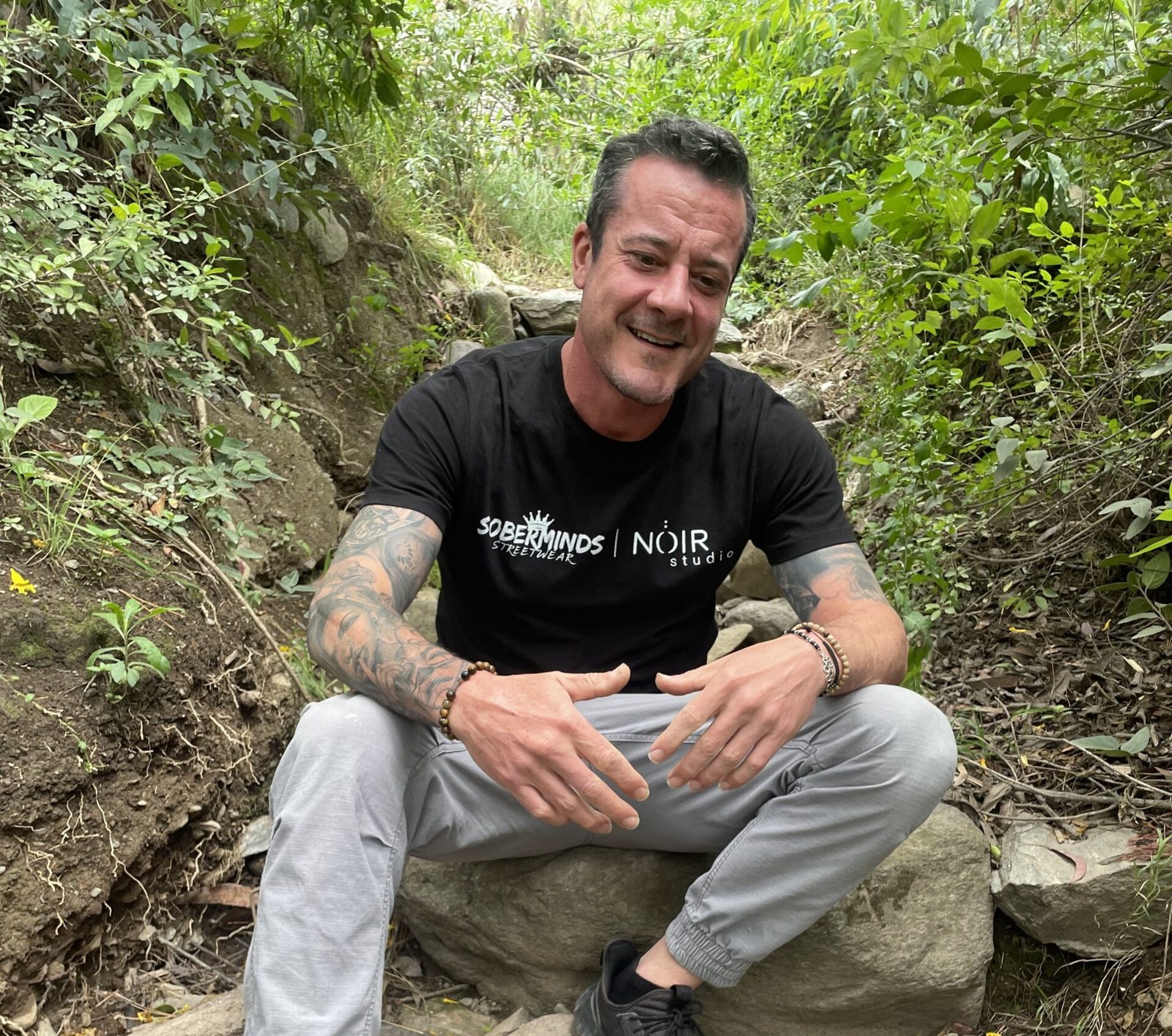
Why Soberminds Exists
Recovery gave me another chance. Building is how I protect it. Soberminds was never about selling shirts. It’s about making recovery visible — something you can be proud of instead of something you hide.
This website isn’t just for readers. It keeps me accountable. Every article reminds me who I’m trying to become. Every design reminds me what I refuse to lose. Helping someone else stay sober helps protect my own sobriety.
Soberminds exists to help other people rebuild their lives. But if I’m being truthful, it also exists because building it helps protect my own recovery. This isn’t only for you. I take that back — it is for me too, because it’s part of what keeps me sober.
Keep Doing
The Work.
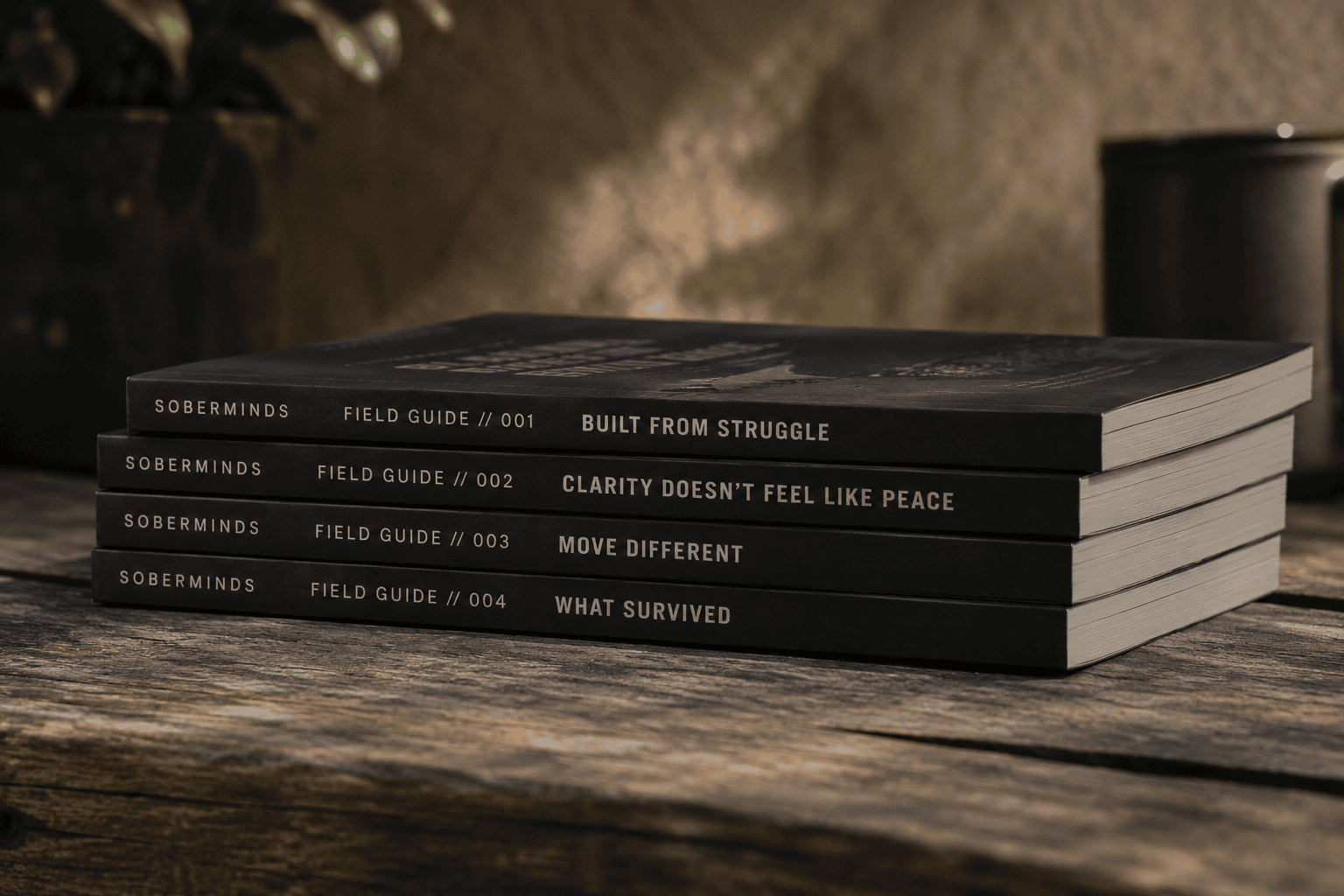
Explore the Field Guide collection, read more Field Notes, or begin with five questions designed for the quiet work of rebuilding.
Download Field Guide // 000