

Discipline After Addiction
Motivation disappears. Discipline stays. Recovery isn’t built on how you feel today — it’s built on what you choose to do anyway.
Explore Field NotesDiscipline after addiction isn’t punishment, and it isn’t perfection. It’s the practice of keeping promises to yourself once nobody’s forcing your hand anymore. Addiction already trained you to repeat a behavior every single day without fail — recovery doesn’t ask you to learn discipline from nothing, it asks you to redirect a skill you already have. This guide covers why motivation runs out, how discipline actually gets built, and why the habits nobody sees are the ones that create real self-trust.
What Discipline After Addiction Really Means
Discipline isn’t military. It isn’t punishment. It isn’t perfection, and it isn’t waking up at 5am because someone on the internet said you should. Recovery discipline looks much smaller than that in practice.
Discipline after addiction is keeping promises to yourself after nobody is watching. That’s the whole definition. Not a grand gesture, not a personality trait you either have or don’t — a private habit of following through, repeated until it becomes reliable.
Most people arrive at recovery believing they lack discipline. Almost nobody actually does. What they lack is a redirect — and a set of daily recovery habits built to hold that redirect in place.

Discipline rarely looks like anything. That’s usually the point.
Why Motivation Doesn’t Last
Motivation is a feeling, and feelings fluctuate — by design, not by failure. It shows up strong in the first weeks of recovery and quietly disappears right around the point where the real work actually starts.
Recovery can’t be built on something that unreliable. If staying sober depends on feeling like it today, you’ve built your recovery on the one thing guaranteed to change without warning.
Motivation starts things. Discipline finishes them.
Addiction Already Taught You Repetition
Here’s what almost nobody tells you: if you sustained an addiction for any real length of time, you already practiced discipline every single day. You showed up for it. You prioritized it above sleep, relationships, money, and comfort. You found a way, consistently, no matter what else was happening.
That wasn’t absence of discipline. That was discipline, aimed at the wrong target. Recovery doesn’t require you to build a skill from nothing — it requires you to redirect a skill you already proved you have.
This is usually the point where people stop seeing themselves as someone who “just isn’t disciplined enough,” and start seeing themselves as someone whose discipline needs a new direction, not a new personality.

The same repetition. A different direction.
How Discipline Is Built
Discipline builds through small wins, repeated until they accumulate into evidence. Not one dramatic commitment — thousands of small, boring, unwitnessed ones. This is what disciplined recovery actually looks like day to day, not the dramatic version most people picture.
- Wake up when you said you would
- Finish what you started
- Go anyway
- Write one page
- Keep today’s promise
- Put your phone down
None of these look impressive individually. Stacked over months, they become the evidence base for a person you can actually trust again — including in your own eyes.
How to Build Discipline After Addiction
- Start with one promise
- Keep it every day
- Don’t add another until it’s automatic
- Measure consistency, not perfection
- Let confidence follow action, because that’s how identity is rebuilt
This order matters more than it looks like it should. Stacking five new habits at once is how most people abandon all five within a week. One kept promise, repeated daily until it stops requiring thought, is what disciplined recovery is actually built from.
Continue the work. The Field Guide series was built for exactly this kind of daily repetition.
Start With Field Guide // 000Small Habits Become Character
A single kept promise doesn’t mean much on its own. Repeated daily, it becomes a habit. Repeated for months, the habit becomes a pattern. Repeated long enough, the pattern becomes identity — not something you’re performing, just something you are.
That’s the direct link between discipline and identity after addiction: discipline is identity in motion, before it’s had time to settle into something permanent.
Every kept promise is evidence, even when nobody’s counting but you.
Discipline Creates Self Trust
Self-trust doesn’t return through a single good week. It rebuilds the same way trust with another person does — through a consistent pattern of kept promises, evaluated honestly over time.
Every promise kept becomes evidence. Evidence accumulates into confidence. Confidence, sustained long enough, becomes identity. That’s the actual sequence — not the reverse. Most people wait to feel confident before acting disciplined. It works the other way around.
Discipline Beats Motivation
Waiting to feel like it before acting is one of the most reliable ways to stay stuck. Discipline means doing the thing anyway — not because you don’t have feelings about it, but because you’ve stopped letting the feeling cast the deciding vote.
There were plenty of days I didn’t want to go to meetings. A friend of mine wouldn’t let that matter. He’d show up at my house and basically make me go, because he knew I was alone and he knew what that meant. He was there when I needed him, without being asked twice. That’s been true about a few people in my life — when I actually needed someone, they were there. His discipline about showing up for me became part of how I learned to show up for myself.
This is where discipline and clarity connect directly: clarity tells you what actually matters; discipline is what makes sure it happens on the days you don’t feel like it.
Discipline and Starting Over
Every act of starting over depends on discipline to actually hold. The decision to start over happens once. The discipline to keep starting over, quietly, every time the old pattern resurfaces, is what makes it real.
Discipline also creates the structure that eventually allows peace in recovery to become possible. Peace rarely arrives first. It tends to show up after enough disciplined repetition has made the chaos genuinely unnecessary.
Founder Reflection
Before any of this, I worked on helicopters and gas turbines — jobs where a missed step in a checklist isn’t a metaphor, it’s a real problem. That kind of work teaches you a specific kind of discipline: not motivation, not inspiration, just the procedure, followed the same way every time, whether you feel like it or not.
I didn’t fully understand until later that recovery runs on the same mechanism. Nobody feels like doing the work every day. You do it anyway, the same way you’d torque a bolt to spec whether or not it was a good day. I learned that checklists don’t care about your emotions. Recovery doesn’t either.
What I didn’t expect was how directly that carried over into everything I’ve built since. Soberminds runs on the same logic as a turbine checklist — not inspiration, just the next step, done correctly, whether or not I feel like doing it that day. The industry changed. The mechanism never did. Read more in my full journey.
The Notebook
When I first got sober, it was really hard to act like a different person than who I’d been just because I’d stopped drinking. Not drinking didn’t automatically fix the rest of it.
My sponsor asked me to bring a notebook and pen to the meeting one day. It didn’t occur to me to buy one. My first instinct was to walk into a store and steal it. That’s who I still was, even sober.
He asked me directly: did you buy it? I had to tell him no. I felt embarrassed admitting it. He told me it changes. It gets easier. That stuck with me more than almost anything else from that first year — not because it was dramatic, but because he didn’t act shocked. He just said keep going.
Learning Not to React
I used to have a real problem with people looking at me. If I made eye contact with the wrong person, I couldn’t let it go. Normally there was no talking involved at all. Usually I was the one rushing across the street to start it.
At some point, my mind started changing. I remember locking eyes with a guy I knew I had history with, and instead of reacting, I just looked at him. Nothing happened. I told my sponsor about it, confused by my own reaction — or lack of one.
He told me to look at it differently: that guy is sick too. You don’t know what he’s going through. Once I actually started seeing people that way, it changed something. Two angry men, seeing the world through the same narrow, aggressive lens, both stuck in the same small ball of anger. Not reacting wasn’t weakness. It was the first real discipline I ever built that had nothing to do with a checklist.
Discipline isn’t about becoming a different person. It’s about becoming someone your future self can rely on.
Discipline Is Keeping Promises
Discipline after addiction isn’t a personality trait some people have and others don’t. It’s a practice, rebuilt one kept promise at a time, on the days nobody’s watching and nothing’s at stake. Every promise kept is evidence. Enough evidence becomes a person you can trust again — starting with yourself.
Discipline isn’t what changes your life. It’s what changes your direction long enough for your life to finally change itself.
- Loading articles…
Frequently Asked Questions
What is discipline after addiction?
Discipline after addiction is the practice of keeping promises to yourself consistently, especially on days when motivation is absent. It’s built through repetition, not willpower alone.
Can discipline be learned?
Yes. Discipline is a skill built through repetition, not a fixed trait. Recovery is largely about redirecting repeated behaviors toward habits that support the life you want to build.
Why do I lose motivation?
Motivation is a feeling, and feelings are inherently unstable. It’s normal for motivation to fade once recovery stops feeling urgent — that’s exactly why discipline matters more than motivation long-term.
How do I build discipline?
Through small, repeated actions kept consistently over time — making your bed, finishing what you start, showing up when it would be easier not to. Consistency compounds faster than intensity.
What habits help recovery?
Simple, repeatable daily habits tend to matter more than dramatic ones: a consistent wake time, movement, writing something down, and finishing small tasks you start.
Does discipline create confidence?
Yes. Confidence tends to follow disciplined action rather than precede it — the action comes first, repeated enough times, and belief in yourself follows as a result.
How long does discipline take?
There’s no fixed timeline. Discipline builds gradually through repeated decisions, and progress is usually easier to recognize looking backward than while it’s happening.
Can discipline rebuild self trust?
Yes. Self-trust rebuilds the same way trust with another person does — through a consistent pattern of kept promises evaluated honestly over time.
Why is consistency important?
Consistency compounds. A single disciplined day rarely changes much on its own, but repeated over months it becomes the evidence base for real, lasting change.
What’s the difference between discipline and motivation?
Motivation is a feeling that comes and goes. Discipline is an action you take regardless of how you feel. Motivation starts things; discipline is what finishes them.
This page reflects one perspective built from lived experience, not clinical guidance. Structured daily routines are widely associated with better long-term recovery outcomes in the research literature — for more on that, and for research-backed context generally:

Written by Mark Tuten, Founder of Soberminds Lifestyle®
Veteran. Founder. Writer documenting recovery, identity, discipline, and rebuilding after addiction. Read the full story.
Keep Doing
The Work.
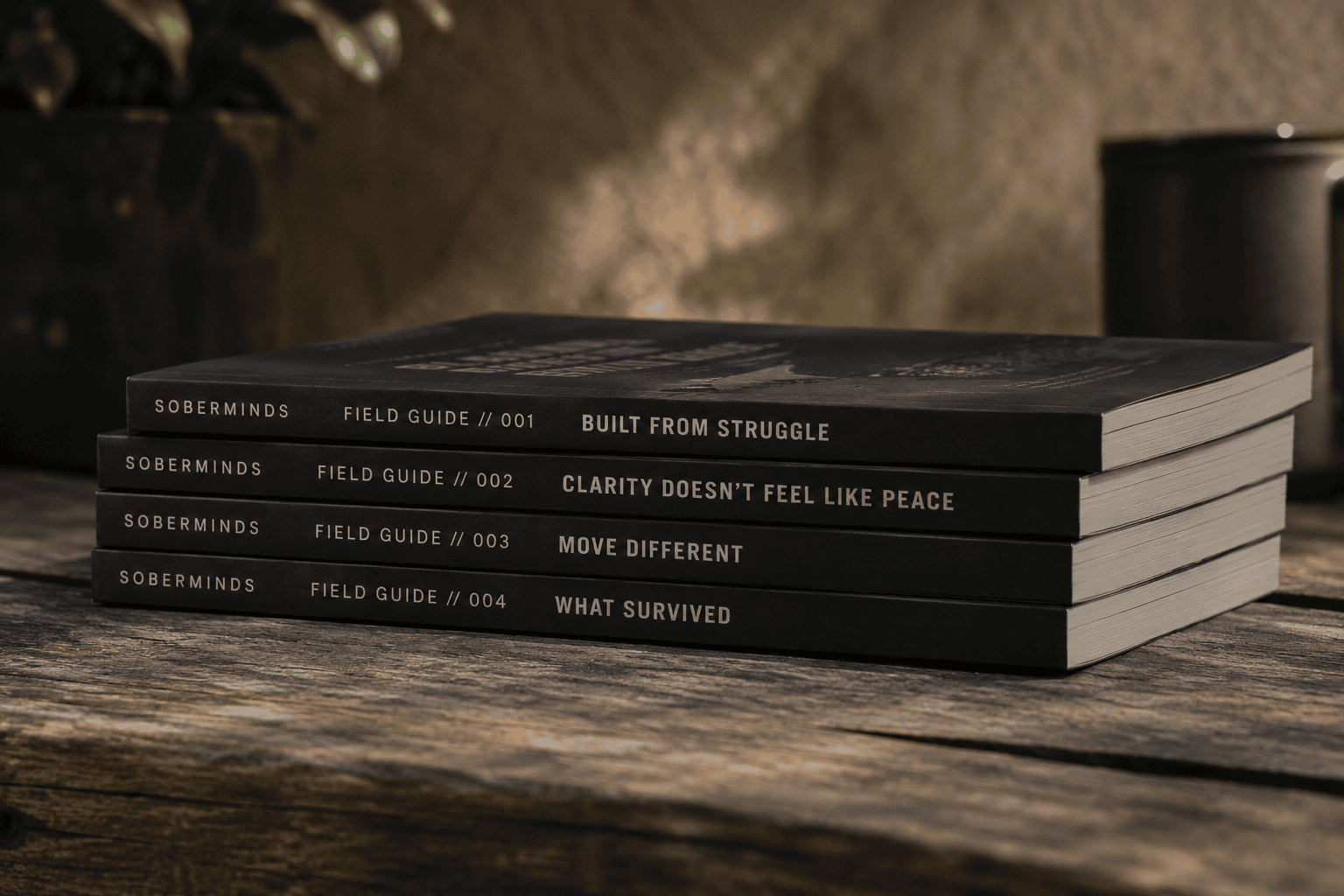
Explore the full Field Guide collection, or browse Soberminds Clothing — Recovery Hoodies and Sobriety Gifts included.
Download Field Guide // 000