
DISCIPLINE — SOBERMINDS FIELD NOTES
Many people become addicted to being busy after addiction without realizing it. I know because I did.
I got sober and immediately started building. A house, gutted down to the studs and redone. Bored a year later, another house, rebuilt again. More cars than I’d like to count, bought wrecked and brought back clean. I was productive, disciplined, sober, and constantly in motion.
I thought that was the work. It was part of it. What I didn’t know yet was that I’d swapped one addiction for a quieter one. Not drugs. Motion.
Being addicted to being busy after addiction describes a pattern where work, projects, productivity, or constant motion become the way a person regulates discomfort after substances are gone. The work itself may be healthy, but if stillness feels impossible without another project, the busyness may be replacing what the addiction once provided.
Key Takeaways
- Getting sober doesn’t automatically end every form of self-regulation through intensity. Sometimes it just changes what the intensity looks like.
- Constant, productive building can still be a way of avoiding stillness.
- A major life change, like moving somewhere new, doesn’t resolve unfinished growth. It can reveal it.
- Growth doesn’t arrive as a final destination. Each stage tends to expose the next thing that still needs work.
- Silence can surface things that constant activity had been quietly covering for.
Why You Become Addicted to Being Busy After Addiction
Addiction had been chaos with no foundation underneath it. Getting sober didn’t hand me a foundation automatically. It just gave me the chance to start building one, and building was exactly what I did. Houses. Cars. Long stretches working offshore. Soberminds existed in some form the whole time, but it wasn’t yet the center of anything. Building was the center. Staying busy, staying productive, staying in motion.
None of that was wasted. It kept me sober, it kept me out of trouble, and it produced real things I’m still proud of. But underneath the productivity was a pattern I couldn’t see yet: I needed the next project lined up before the last one finished, because the space in between made me uncomfortable in a way I didn’t have a name for.
I wasn’t addicted to drugs anymore. I might still have been addicted to motion. Not because motion was bad, but because motion had been protecting me from sitting still.
The Plot Twist Peru Wasn’t Supposed to Be
Five years sober, I thought I was done. I thought I’d earned the right to finally relax, and moving to Peru was supposed to be the reward lap. Now I can finally be at peace, I remember thinking. Now I can just be still.
Instead, everything got quiet, and the quiet told me something the chaos never could. I thought I was okay to be at peace by myself, alone, in quietness without chaos. But I wasn’t. There was nothing left to renovate, no wrecked car waiting in the driveway, no offshore schedule keeping me occupied. Just stillness, and I found out fast how little practice I actually had sitting inside it.
Peru didn’t save me. Peru revealed me. Moving there wasn’t the end of my rebuilding. It showed me there were parts of me I hadn’t rebuilt yet, parts that five years of houses and cars had never actually required me to touch.
Why Being Busy After Addiction Can Become Avoidance
This is worth sitting with, because it’s easy to miss. Nobody warns you that avoidance can look genuinely productive. It’s obvious when someone’s avoiding their life by doing nothing. It’s much harder to spot when someone’s avoiding their life by doing an enormous amount, especially when the doing produces real, visible results.
I had finished houses to point to. Cars that ran better than they had any right to. By any outside measure, I was building a life, and I genuinely was. But the pattern underneath the visible progress was quieter and harder to see: every time a project finished, I needed the next one lined up before the stillness in between could catch up with me.
The test was never whether what I was building was good. It was whether I could tolerate the space between projects without immediately filling it. For years, I couldn’t. That wasn’t evidence the building was wasted. It was evidence there was a different kind of building still waiting, one Peru eventually forced into view.
What the Silence Actually Taught Me
The shift wasn’t instant, and it wasn’t comfortable. The first stretch without a project felt closer to withdrawal than to peace. I noticed how fast I looked for something to fix, some problem to solve, anything that would let me feel useful and occupied the way the houses and the cars used to.
What eventually changed wasn’t the discomfort disappearing. It was learning to sit inside it without immediately reaching for a project to make it go away. That’s a different skill than renovation or rebuilding an engine. It doesn’t produce a finished product you can point to at the end of the day. Some days it just looked like getting through a quiet afternoon without inventing a crisis to manage. SAMHSA’s framework for recovery names coping skills and stress management as ongoing dimensions of recovery, not a box that gets checked once and left behind, which tracks with how slowly this particular skill actually built for me.
Soberminds grew directly out of that stretch, not because a new country unlocked some creative switch, but because for the first time in years, nothing else was competing for the attention. The business had existed the whole time. What changed was my capacity to sit with it, and with myself, long enough to actually build it properly instead of working on it in the gaps between other distractions.
Every Stage Reveals the Work You Haven’t Done Yet
I used to think sobriety itself was the work. Then I discovered discipline was its own separate project, one sobriety alone hadn’t handed me. I thought discipline was the work. Then Peru revealed stillness as a different project entirely, one discipline hadn’t taught me either.
I used to think growth had finish lines. It doesn’t.
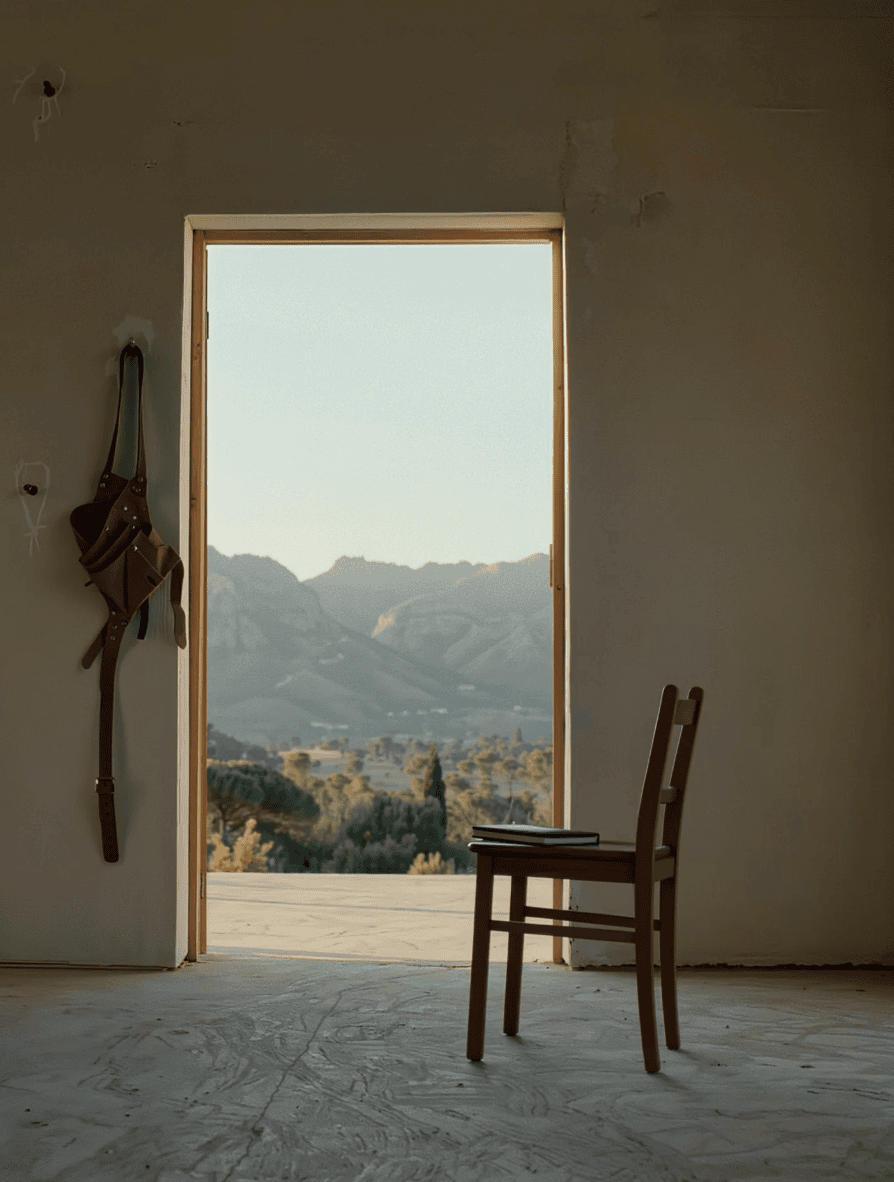
Growth doesn’t appear to work like a staircase with a final step. It’s closer to a series of rooms. Every time you think you’ve reached the last one, there’s another door. Sometimes growth looks like rebuilding an engine. Sometimes it looks like renovating a house. Sometimes it looks like writing something down instead of running from it. Sometimes it looks like sitting in a quiet room without needing to escape it. Each stage seems to ask something different of you, and finishing one doesn’t mean the work is over. It usually just means the next room becomes visible.
Founder Reflection
I used to think Peru was the thing that changed me. It wasn’t. Peru just took away the option to keep building my way around the harder work. I got there expecting peace and found out instead how much growth I still had left to do, specifically in the one area I’d never had to test: being still, being quiet, being alone with myself with nothing to fix. The silence told me what the chaos never could, mostly because the chaos had never given me a quiet enough moment to hear it.
The Difference Between Building and Running
It would be easy to read this as an argument against building anything, against staying busy, against renovating houses or working hard. That’s not the point, and it’s worth being precise about the difference, because the two things can look identical from the outside.
Building, in the healthy sense, has an endpoint you can actually sit with once you reach it. You finish the project, and you’re able to stay in the accomplishment for a while, let it be enough, before deciding what comes next. Running looks the same on paper. Same houses, same cars, same long hours. The difference shows up in the gap after the project ends. If that gap feels unbearable, if the very first instinct is to line up the next thing before the current one has even settled, that’s usually a sign the activity is doing more than building. It’s also managing something.
I didn’t have language for this distinction while I was living it. From the outside, and even to myself most days, it looked like ambition. Buy a house, fix it, sell it or move into the next project. Work offshore for stretches, come back, find the next thing. It took losing access to that pattern entirely, in a place with no next house waiting and no offshore rotation to return to, before I could see that some of what I’d called ambition had also been a way of never sitting still long enough to notice what stillness might bring up.
Frequently Asked Questions
Can you replace addiction to substances with an addiction to being busy?
For some people, yes. Constant activity and productivity can serve a similar regulating function that substances once did, offering distraction, intensity, or a sense of control. This doesn’t make the activity itself bad, but it’s worth examining honestly if stillness feels consistently intolerable without a project to fill it.
Why does a major life change sometimes reveal problems instead of solving them?
A big change, like moving, a new job, or a new relationship, often removes the routines and distractions that were previously covering for unresolved issues. Once those distractions are gone, whatever they’d been masking tends to surface, not because the change caused a new problem, but because it stopped hiding an existing one.
Is it normal to feel uncomfortable with stillness after years of sobriety?
It’s more common than people expect, especially for those who got sober by replacing one intensity with another, like constant work or constant projects. Discomfort with unstructured stillness doesn’t mean the recovery wasn’t genuine. It often just means stillness is a skill that hasn’t been practiced yet.
Does personal growth ever reach a finished point?
For most people, growth doesn’t seem to resolve into a single finished state. Each stage of change tends to reveal the next area that still needs attention, rather than arriving at a permanent, completed version of yourself. That ongoing quality isn’t a failure of the process. It appears to simply be how the process tends to work.
The Next Room
This connects to the larger question of what identity after addiction actually means, and to the disorientation covered in why you don’t recognize yourself after getting sober. Whatever room you’re standing in right now, discipline, stillness, something else entirely, it’s worth asking honestly whether the work you’re doing is building something or just keeping you moving fast enough to avoid the next door.
The silence eventually tells you what the chaos never could. You just have to be willing to stop moving long enough to hear it.
Ten toes down.
Start With Field Guide // 000
Five questions, a free taste of the Field Guide series. Enter your email below, confirm your subscription, and the free download will be waiting for you.
If this is the work you are in right now, Field Guide 003 — Move Different is twenty reflective questions built around it. Behavior, not slogans.
A Taste of the Work.
Five questions pulled from across the Field Guide series — the ones that stay with you, the ones that catch up with you anyway.
No noise. No daily sales emails. Just Field Notes and the work.
Built from struggle. — Soberminds®
sobermindslifestyle.com
Free Field Guide // 000
A Taste of the Work.
Five questions pulled from the Soberminds Field Guide series — the ones that stay with you, the ones that catch up with you anyway.
Send It To My Inbox